
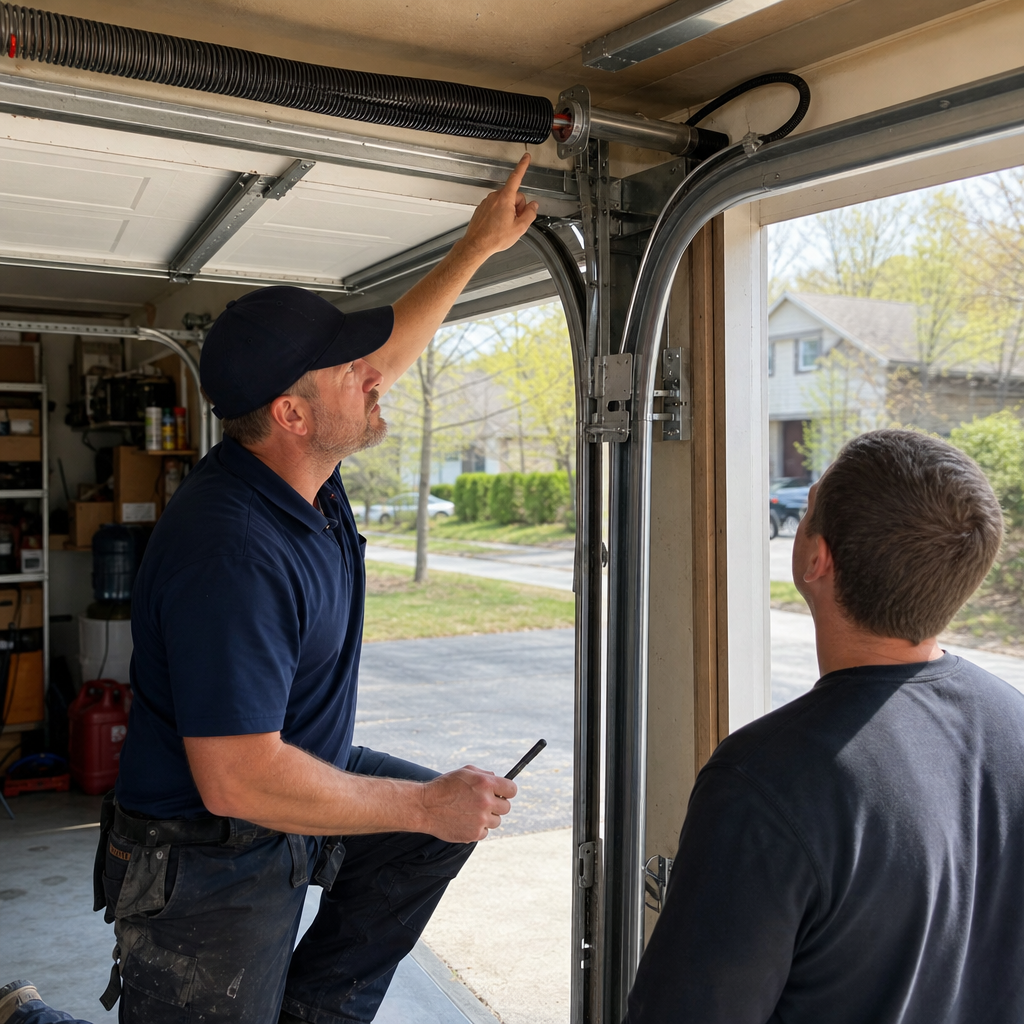
Why Your Garage Door Won’t Close in West Virginia — And the 60-Second Check That Saves You a Service Call
If your garage door won’t close, the most likely cause is misaligned or blocked safety sensors — but the fastest way to know for sure takes one minute and tells you whether you need a pro or just a damp rag. In West Virginia, we’ve found that roughly half of “won’t close” calls we field across the Kanawha Valley and up into the Monongahela National Forest region resolve with something the homeowner can handle themselves. The other half involves opener logic boards, force settings, or mechanical issues that need hands-on repair. Either way, knowing which category you’re in gets your door working faster and saves you from paying for a five-minute fix. If you get stuck at any step, call us at (855) 934-0471 — we’ll talk you through it or come out same-day.
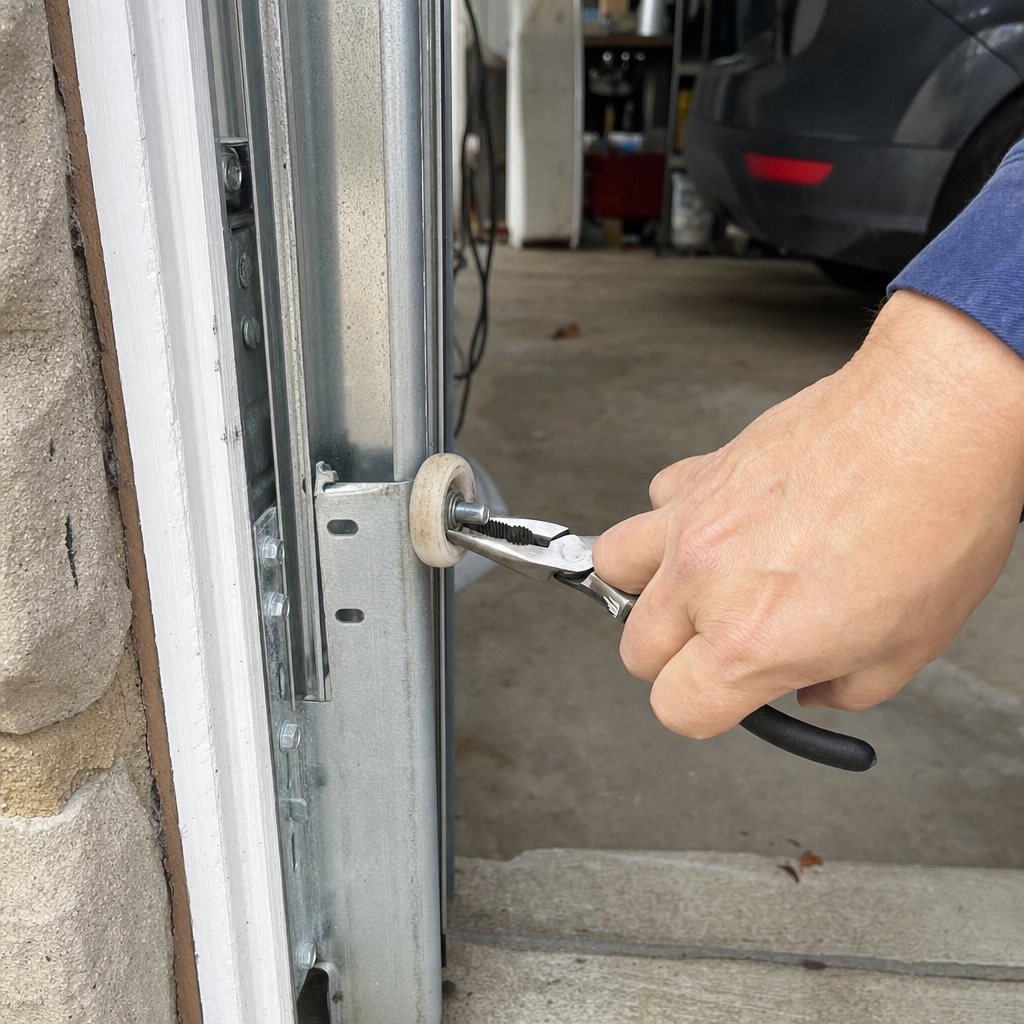
The Sensor Hand-Check: Start Here Every Time
Here’s the test we teach homeowners in Charleston’s South Hills, in Huntington’s older bungalow neighborhoods, and out along the winding roads of Fayette County: cover one safety sensor with your palm and watch the LED on the opposite unit. If that uncovered sensor glows solid — no flicker, no blink — your sensors are talking to each other fine. The problem lives upstream: opener force settings, a failing wall button, remote signal issues, or a logic board going bad. But if the LED blinks or goes dark, you’ve got an alignment or obstruction problem at the sensor level.
We learned to start every “won’t close” diagnosis this way because it splits the troubleshooting tree in half immediately. Douglas Ross — Owner and Lead Technician at Halcyon Garage Door Installation West Virginia — picked up this habit during his early years working the humid river valleys and hollers of the state, where sensor issues outnumber opener failures about three to one in summer months.
The sensors sit four to six inches off the floor on either side of your door track, usually with small LED windows facing each other across the door opening. They’re designed to stop the door if anything breaks that invisible beam — a child, a pet, a stray basketball. When they can’t see each other, the opener receives a constant “obstruction detected” signal and refuses to close the door. The opener isn’t broken; it’s doing exactly what it’s supposed to do. Your job is figuring out why it thinks something’s there.
West Virginia’s Seasonal Sensor Problem: What the Competitors Miss
Here’s a local detail that generic troubleshooting guides never mention: West Virginia’s summers breed a specific kind of sensor failure that looks like misalignment but isn’t. Spider webs, dirt dauber nests, and pollen accumulation in the sensor lens housing block the photo-eye without visibly disturbing the bracket position. We’ve pulled compact dirt dauber nests — those mud tubes wasps build — out of sensor housings in garages from Beckley to Martinsburg, and the homeowner never saw them because they’re tucked inside the plastic shroud, invisible until you’re eye-level with the bracket.
The humidity in the Kanawha River valley and the shelter of attached garages create ideal conditions for this. A sensor that worked fine in April starts failing in July not because it got bumped, but because a spider spent three weeks weaving across the lens. We’ve seen homeowners replace perfectly good Genie opener logic boards before discovering a single strand of webbing across the emitter.
Your fix: pop the sensor housings open if your model allows, or use compressed air to blow out the lens area. Wipe gently with a microfiber cloth dampened with glass cleaner — never spray directly into the electronics. Realign by loosening the wing nut, centering the sensors so they face each other dead-on, and tightening down while watching for solid LEDs on both units.
The Wall Button vs. Remote Test: Isolating the Real Failure
This distinction saves us and our customers hours of misdiagnosis every year. After confirming your sensors are aligned (solid LEDs), test whether the door closes using the hardwired wall button — not the remote, not the keypad, not the app.
- Door closes with wall button but not remote: Your sensors and opener are fine. The problem is remote signal (dead battery, depleted range, frequency interference) or the opener’s antenna wire. Replace the remote battery first — we use CR2032s in most LiftMaster and Chamberlain remotes — then check whether the antenna wire hanging from the opener motor head got knocked or coiled. This is a $5 fix, not a $200 service call.
- Door won’t close with wall button either: You’ve eliminated the remote entirely. The issue is opener settings, wiring between wall button and motor, or the logic board itself. Time to call for diagnosis.
We walked a homeowner in Morgantown’s Suncrest neighborhood through this exact sequence last spring. She was ready to replace her Craftsman opener because the remote “stopped working.” The wall button closed the door fine. Turned out her teenager had grabbed the remote for a road trip and left it in a cup holder, button depressed, draining the battery dead. Twenty seconds, new battery, problem solved. She still left us a five-star review for the phone guidance.
Three More 30-Second Checks Before You Call
Manual Lock Engagement
Look for a horizontal bar or handle in the center of your door, usually mounted to the inside face. If it’s engaged — often by someone bumping it, or by a kid who discovered it — the opener motor runs but can’t move the door because the track is physically locked. Disengage it and test again. We see this constantly in West Virginia’s older homes with detached garages, especially after holiday weekends when every relative has been through the space.
Visual Track Obstruction Scan
Run your eyes along both vertical tracks from floor to curved section. Look for a stray broom handle, a shifted storage bin, a piece of firewood that rolled — anything that breaks the door’s travel path. Also check for bent track sections, which are common after winter freeze-thaw cycles shift concrete garage floors in the Mountain State’s clay-heavy soils. A door that closes partway then reverses — which is why homeowners ask Why Does my Garage Door Reverse? (West Virginia, WV) — often hits a track deformation it can’t overcome.
Force Setting Reality Check
Modern openers have adjustable force settings for up and down travel. If your door has gotten heavier over time — worn rollers, dry track, a spring slowly losing tension — the opener may detect what it interprets as excess resistance and auto-reverse. This mimics a sensor problem but isn’t. The fix is mechanical, not electronic: lubricate the track, replace worn rollers, or address spring tension. Don’t just crank up the force setting to override the symptom — that’s how doors crush objects they should detect.
What NOT to Do: The Safety Override That Creates Liability
We need to address the workaround some homeowners find online: taping over or bypassing the safety sensors so the door closes regardless of beam interruption. Yes, it “works.” It’s also how people end up in court.
Those sensors are federally mandated under UL 325 safety standards for a reason. A closing garage door exerts hundreds of pounds of force. The auto-reverse feature — triggered by the sensor beam — is what keeps that force from hitting a child who runs through the opening, a pet who darts under the descending panel, or your own legs if you trip. Disabling it doesn’t fix your door; it converts a malfunctioning safety system into a dangerous uncontrolled descent.
We’ve been called to homes in Charleston’s East End and Wheeling’s historic districts where the previous owner or a handyman “solved” a sensor problem this way. We remove the bypass and fix the actual issue, every time. If your sensors are genuinely failed and can’t be aligned, replacement runs $85–$165 in parts and labor — not worth risking injury or liability over.
When to Stop Diagnosing and Call Douglas Ross
There are hard stops in self-troubleshooting, and we want you to recognize them before you create a bigger problem. Call (855) 934-0471 immediately if you see any of the following:
- Visible cable sag or fraying: The cables alongside your door tracks are under extreme tension. If they’re loose, unwinding, or showing broken strands, the door’s counterbalance system is compromised. Forcing operation can drop the door or snap a cable with lethal force.
- Gap between top door panel and header: This indicates a broken torsion spring or spring system failure. The opener is now trying to lift dead weight it was never designed to handle. Running it strains the motor and risks door collapse.
- Door closes crooked or binds in the track: Track misalignment from foundation settling — common in West Virginia’s freeze-thaw terrain — can cause the door to jam or derail. Forcing it bends panels and destroys rollers.
- Burning smell or clicking opener with no movement: Motor gear stripping or capacitor failure. Continuing to cycle the opener destroys the motor head entirely.
These aren’t sensor issues or remote problems. They’re mechanical failures that need trained handling, and they’re exactly why we carry a full inventory of springs, cables, rollers, and opener components on every service vehicle. Douglas Ross personally assesses these situations because torsion spring work in particular demands precision — the wrong wire size or wind direction turns a repair into a callback, or worse, an injury.
What Garage Door “Won’t Close” Repairs Cost in West Virginia
Here’s the honest breakdown we give homeowners who’ve done their diagnostic homework and know what they need. These ranges reflect our actual pricing across West Virginia’s varied markets — from Charleston metro to smaller service areas in the Alleghenies.
| Repair Type | Typical Range in WV |
|---|---|
| Sensor realignment / cleaning | $85 – $165 |
| Sensor replacement (pair) | $110 – $195 |
| Remote / keypad programming | $65 – $125 |
| Opener logic board replacement | $225 – $395 |
| Wall button wiring repair | $95 – $175 |
| Force setting adjustment + lube service | $110 – $165 |
| General Garage Door Repair | $135 – $540 |
The full span of garage door repair work in West Virginia runs $135–$540 depending on parts and labor involved. Sensor issues cluster at the lower end; opener replacements and structural work trend higher. We quote upfront before starting any work — no diagnostic fees that get waived only if you buy something, no surprise add-ons.
For reference, here are related service ranges we quote regularly:
- Spring Repair: $160–$305
- Cable Repair: $115–$225
- Opener Repair: $110–$290
- Opener Installation: $225–$495
- Panel Replacement: $225–$450
- Track Realignment: $110–$215
- Roller Replacement: $100–$200
- New Door Installation: $630–$1980
Why Halcyon Handles “Won’t Close” Calls Differently
Most garage door companies in West Virginia send whoever’s available — a rotating subcontractor, a trainee with six weeks of experience, a dispatcher’s best guess — which is why finding the Best Garage Door Repair in West Virginia, WV matters. When you call Halcyon Garage Door Installation West Virginia, Douglas Ross — Owner and Lead Technician — handles your job personally. He’s the same person who answers technical questions on the phone, who shows up at your door, and who signs off on the work.
This matters for “won’t close” calls specifically because the symptoms lie. A misdiagnosed sensor problem becomes an unnecessary opener replacement. A simple remote issue gets sold as a full system upgrade. When the person diagnosing your door has eleven years of singular garage door focus and nearly 600 verified reviews averaging 4.9 stars to protect, the incentive runs the other way: fix it right, fix it once, earn the next call by referral.
We’re factory-familiar with the brands already on your home — LiftMaster, Chamberlain, Genie, Clopay, and the others in our eight-brand scope — so we don’t guess at compatibility or order wrong parts. Our Emergency Garage Door Repair in West Virginia, WV is core to what we do, not a premium tier, because a door that won’t close at 8 PM on a Sunday traps your car and leaves your home exposed. We stock components for same-day resolution on most common failures.
Douglas grew up in Charleston’s Kanawha City neighborhood, learning practical repair from his grandfather’s old detached garage by the river. After completing BridgeValley Community & Technical College’s mechanical technology program, he’s spent over a decade building Halcyon into the company West Virginia homeowners call when they want the job done without callbacks. His daughter now rides along on Saturday service calls — there’s no better classroom than the field, and no better quality control than knowing your kid is watching.
A quiet garage door is a safe garage door — let’s keep it that way.
FAQs
Most “won’t close” repairs in West Virginia run $85–$395, with sensor realignment or cleaning at the low end and opener logic board replacement at the high end. The exact cost depends on whether the issue is electronic (sensors, remote, board) or mechanical (springs, cables, track). Call (855) 934-0471 for a free estimate — we’ll diagnose over the phone when possible and quote upfront before any work begins.
Yes, same-day service is available for most “won’t close” issues across our West Virginia service area, including Charleston, Huntington, Morgantown, and surrounding communities. We carry sensors, remotes, opener components, and standard hardware on every vehicle. Emergency garage door service is part of our core offering, not an upsell tier, because a non-closing door creates immediate security and access problems.
This pattern isolates the problem to your remote or opener antenna, not the safety sensors or logic board. Start with a fresh battery — CR2032 for most LiftMaster and Chamberlain remotes — then check whether the antenna wire dangling from the opener motor head is straight and uncut. If both check out, the remote itself may need reprogramming or replacement. This is one of the most common misdiagnoses we see; homeowners replace openers when they only needed a $5 battery.
No — bypassing safety sensors disables a federally mandated protection system and creates serious liability if someone is injured by the closing door. The sensors exist because a descending garage door exerts lethal force. A child, pet, or adult in the door path won’t trigger auto-reverse if the beam is defeated. Fix the actual sensor issue (alignment, cleaning, or replacement at $110–$195) rather than creating a hazard to save money.
Stop immediately if you see sagging or frayed cables, a gap between the top door panel and header (indicating spring failure), crooked door travel, or a burning smell from the opener motor. These indicate mechanical failures or electrical damage that risks injury or further destruction if forced. Douglas Ross handles these calls personally — torsion spring work in particular requires precise wire sizing and winding technique that untrained attempts make dangerous.
If you’d rather have it looked at, Halcyon Garage Door Installation West Virginia offers a no-pressure assessment anywhere in our West Virginia service area — call (855) 934-0471 and we’ll walk through what you’re seeing or come diagnose it in person.
Written by Douglas Ross, Owner & Lead Technician at Halcyon Garage Door Installation West Virginia, serving West Virginia, WV.