
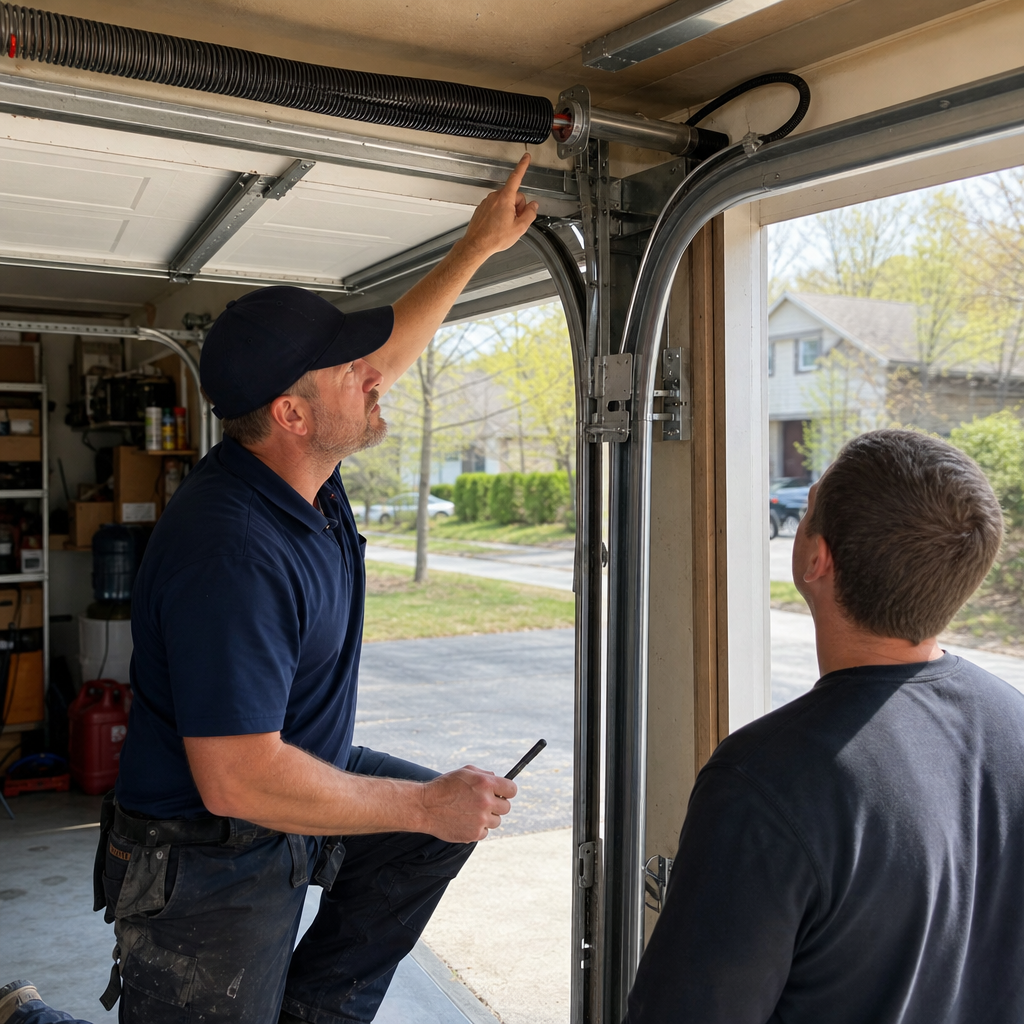
Why Does My Garage Door Reverse Before It Closes in West Virginia?
A garage door that reverses before hitting the floor is almost always its safety system responding to one of three triggers: misaligned or blocked photoelectric sensors, a close-force limit set too low for current conditions, or a travel-limit setting that stops the door short. In West Virginia, we’ve found the cause follows a seasonal pattern — random reversals point to sensors, consistent reversals at the same height suggest force or travel limits, and reversals that only appear when temperatures drop below freezing usually mean the door itself has become harder to move. If your door is reversing right now and you need Emergency Garage Door Repair in West Virginia, WV, call us at (855) 934-0471 — Douglas Ross handles these calls personally.
How West Virginia’s Climate Changes What Goes Wrong
West Virginia’s winter swing matters more than most homeowners realize. We’ve spent eleven years tracking service calls across the state, and the pattern is unmistakable: reversal complaints spike in January and February, drop through spring, then creep back up during late fall cold snaps. The reason isn’t that openers suddenly forget how to work — it’s that the door itself becomes physically harder to close.
Cold thickens the lithium-based grease in roller bearings and hinge pivots. In Charleston’s Kanawha Valley, where Douglas grew up working on his grandfather’s old detached garage, or up in Morgantown’s hill neighborhoods, a door that rolled freely at 55°F can feel like it’s dragging through molasses at 20°F. The opener’s force sensor reads that resistance as a potential obstruction and reverses. The safety system is doing its job correctly; the mechanical system behind it needs attention.
We’ve also seen this in newer subdivisions around Hurricane and Teays Valley, where tighter construction sometimes means garages stay slightly warmer — but the doors face more direct wind exposure. The specific microclimate of your garage matters. A door on the north side of a house in the Eastern Panhandle, catching sustained wind off the Alleghenies, will behave differently than the same model in a sheltered Charleston carport.
The Three Reversal Triggers: A Homeowner’s Diagnostic Sequence
Before calling anyone, you can narrow the cause in about five minutes. We’ve taught this sequence to hundreds of West Virginia homeowners, and it saves both of us time.
Trigger 1: Photoelectric Sensor Problems (The Random Reversal)
If your door reverses unpredictably — sometimes at 2 feet, sometimes at 6 inches, sometimes not at all — suspect the safety sensors first. These sit a few inches off the floor on either side of the door track and shoot an invisible beam across the opening. Anything breaking that beam triggers reversal.
What to check:
- Look for the indicator LEDs on each sensor. On LiftMaster and Chamberlain units — the most common openers we see in West Virginia homes — both sensors should show steady amber or yellow lights when aligned. One sends, one receives; if either blinks, the beam isn’t connecting.
- On Genie openers, the sending sensor typically glows red steadily, while the receiving sensor shows green only when aligned. Blinking or dark means misalignment.
- Check for spider webs, leaf debris, or the plastic bin that got nudged against the sensor bracket last Tuesday. We’ve found everything from dog chew toys to ice buildup blocking these.
- Verify the sensors haven’t been knocked askew. A bumped bracket during snow shovel storage is a January classic in West Virginia garages.
If both LEDs show steady, correct colors and nothing blocks the beam, sensors aren’t your problem. Move to the next trigger.
Trigger 2: Close-Force Limit Set Too Low (The Consistent, Same-Point Reversal)
When a door reverses at exactly the same point every time — say, 18 inches from the floor, without variation — the opener’s force limit is almost certainly set below what the door currently needs. This is where West Virginia’s cold weather enters the equation.
The opener has a calibrated threshold: “If I feel more than X resistance, something’s in the way, so reverse.” When cold thickens lubricant, or when a roller starts sticking in its track, the normal operating force exceeds that threshold. The opener thinks it’s hitting an obstruction. It isn’t — but the safety logic doesn’t know that.
Here’s the critical detail most competitors gloss over: on openers more than 7-10 years old, raising the force limit to compensate for a stiff door can mask worn drive gears. We’ve seen homeowners in South Hills and the West Side of Charleston crank their force settings year after year, never realizing the real problem is a stripped nylon gear inside the opener head that’s progressively losing mechanical advantage. Eventually the gear fails completely, and the opener runs but doesn’t move the door. At that point, you’re looking at opener repair at $110–$290 or opener installation at $225–$495, where earlier intervention might have been a $100–$200 roller replacement and proper lubrication.
The honest test: Disengage the opener (pull the red release cord), and lift the door manually. It should move smoothly through its full travel with moderate, even effort. If it binds, grinds, or feels heavier in one section, the door mechanism needs service — not a force-limit adjustment.
Trigger 3: Travel-Limit Set Too Short (The “Almost There” Reversal)
If the door reaches the floor, seems to think about it, then reverses — or stops a consistent inch or two short — the travel-limit switch is telling the opener the floor is higher than it actually is. This setting tells the opener how far down to go before it should stop and hold position.
Travel limits drift over years of vibration and thermal cycling. We’ve noticed this more frequently in homes along the Ohio River valley, where humidity swings are sharper and metal components expand and contract through wider ranges. It’s a five-minute adjustment for someone who knows the control board layout, but the specific button sequence varies significantly between brands. On older Craftsman units (rebadged Chamberlains), the limit dials are physical screws; on newer LiftMaster MyQ models, it’s a digital calibration through the wall button.
When Reversal Is Actually the Correct Response
Sometimes a reversing door is not a problem to fix — it’s a safety system working exactly as designed, protecting something that genuinely needs protection. We want West Virginia homeowners to recognize these situations, because overriding them is dangerous.
A bent track section creates exactly the resistance signature an opener interprets as obstruction, and it’s a common reason homeowners need Garage Door Off Track Repair in West Virginia, WV. We’ve found this in garages where a vehicle bumper clipped the vertical track, or where a ladder fell against the horizontal run. The door may still move, but it’s fighting metal-on-metal binding that will worsen with every cycle. Forcing it through will either tear the door apart or strip the opener.
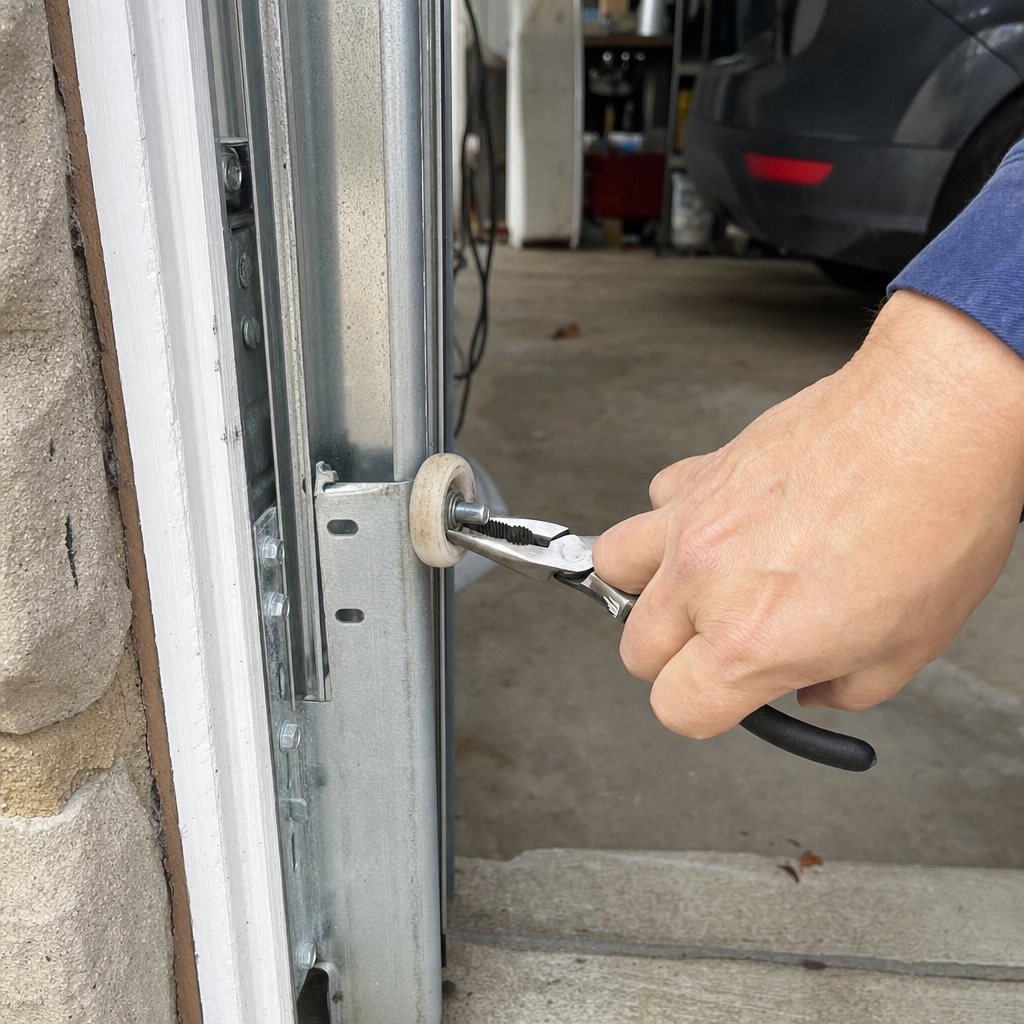
Frozen rollers are another honest reversal trigger. In unheated garages around Beckley or Bluefield, where overnight lows can sit in single digits for weeks, steel rollers seize in their housings. The opener correctly detects something wrong. The fix is freeing and lubricating the rollers, not defeating the safety system.
Safety note: Garage door springs, cables, and openers under tension can cause serious injury. If your manual test reveals binding, grinding, or uneven movement you can’t easily identify, stop and call a trained professional. We’ve handled torsion spring jobs across West Virginia for eleven years specifically because this work demands respect for the forces involved.
What Fixing a Reversing Door Costs in West Virginia
Once you’ve run the diagnostic sequence above, you’ll know roughly what you’re dealing with. Here’s what we typically see for reversal-related repairs across the state, from Charleston to Martinsburg:
| Service | Typical Range | When It Applies |
|---|---|---|
| Sensor realignment / cleaning | $110–$215 | Misaligned or obstructed safety sensors |
| Roller replacement + lubrication | $100–$200 | Stiff or seized rollers causing force-triggered reversal |
| Track realignment | $110–$215 | Bent or twisted track sections |
| Opener force/travel adjustment | $110–$290 | Calibration issues on otherwise healthy opener |
| Opener repair (gear assembly, etc.) | $110–$290 | Worn internal components masking as limit problems |
| Opener installation | $225–$495 | Units beyond reliable repair, typically 12+ years old |
Our Garage Door Repair service covers all of these scenarios. We don’t charge diagnostic fees separately when you proceed with the repair — Douglas Ross believes you shouldn’t pay twice to learn what’s wrong and then fix it.
Brand-Specific Sensor Behavior We See Most Often
Since we service LiftMaster, Chamberlain, Genie, Clopay, Amarr, Wayne Dalton, Craftsman, and Raynor equipment, we carry replacement sensors and brackets for all of them. The LED behavior differs enough that homeowners sometimes misread “working” for “broken”:
- LiftMaster / Chamberlain (manufactured by Chamberlain Group): Sending sensor shows steady amber; receiving sensor shows steady green when aligned. Blinking green on the receiver means misalignment or obstruction. No light on either means no power — check the wiring harness.
- Genie: Sending sensor shows steady red; receiving sensor shows steady green when aligned. Some older Genie models use red on both sensors, with the receiver dimming or blinking when misaligned — a detail that confuses homeowners who expect the Chamberlain color pattern.
- Craftsman: Pre-2018 units follow Chamberlain patterns (same manufacturer). Post-2018 Craftsman openers use a different control board layout with single-LED wall consoles that display error codes numerically rather than through sensor colors.
We’ve stocked and serviced these brands for eleven years, which means we’re not guessing at part compatibility or ordering the wrong sensor while your car sits in the driveway. When your garage door fails, you don’t have time to gamble on an unknown crew.
Why WV Winters Make This Worse — And What Prevents It
The most common reversal call we get in January is some variation of: “It worked fine in October.” That’s not coincidence; it’s thermodynamics.
Standard lithium-based garage door lubricants thicken measurably below 35°F. In West Virginia, where garage temperatures routinely drop below that from December through February, the effective weight of the door increases because the opener must overcome stiffer grease in every hinge and roller. A force limit that allowed comfortable margin in autumn now sits right at the edge of normal operating resistance. Add a slightly worn roller or a track with accumulated grime, and you’ve got consistent reversal.
The preventive fix is straightforward: annual lubrication with a low-temperature-rated synthetic lubricant, applied to hinges, rollers, and bearing plates before the first sustained cold snap. We do this as part of routine home maintenance visits, but homeowners can also handle it themselves with the right product. The wrong product — standard WD-40, for instance — actually attracts dust and worsens the problem within months.
We’ve also noticed that homes in higher elevations — the Allegheny Highlands around Elkins, or the ridge neighborhoods above Morgantown — see this more acutely because garages experience wider temperature swings between day and night. The repeated thermal cycling accelerates grease breakdown and metal fatigue.
Key Takeaways
- Random reversals = sensor problem; consistent same-point reversals = force or travel limit; cold-weather-only reversals = door mechanics need service.
- Always test the door manually (disengaged from opener) before adjusting force limits — binding indicates mechanical issues, not calibration.
- Raising force limits on older openers can mask worn drive gears; know your opener’s age before compensating.
- West Virginia’s winter cold thickens lubricants and increases effective door weight — seasonal maintenance prevents most cold-weather reversals.
- Sensor LED colors differ by brand; know your opener model before interpreting what the lights mean.
FAQs
Most reversal fixes run between $110 and $290, depending on whether it’s a sensor alignment, roller service, or opener calibration issue. If the opener itself needs internal repair or replacement, the range extends to $225–$495 for installation. Call (855) 934-0471 for an exact quote — estimates are free, and Douglas Ross handles the diagnosis personally.
You can safely check for sensor obstructions and test manual door operation yourself — those steps tell you whether the problem is simple or needs hands-on repair. Never attempt to adjust or disable force limits if the door shows binding, grinding, or uneven movement; those symptoms indicate spring, cable, or track issues that require professional handling. We’ve been called to too many West Virginia homes where a DIY force adjustment turned a $150 roller job into a $400 opener repair.
Cold temperatures thicken the grease in your door’s rollers and hinges, increasing the force your opener needs to close the door. The opener’s safety sensor correctly reads this as abnormal resistance and reverses. The fix is usually cleaning and relubricating the door hardware with low-temperature-rated synthetic lubricant, not adjusting the opener. This is one of the most predictable seasonal patterns we see across West Virginia.
Check the indicator LEDs on each sensor: LiftMaster and Chamberlain units show steady amber (sender) and green (receiver) when aligned; Genie units show steady red (sender) and green (receiver). Blinking or dark LEDs indicate misalignment, wiring issues, or no power. If both LEDs show correct steady colors but the door still reverses, the sensors aren’t your problem — move to testing force limits and manual door operation.
For openers under 10 years old, repair is usually more economical — typical opener repair runs $110–$290 versus $225–$495 for new installation. However, if the opener needs major internal work and is already past 7-10 years, replacement often makes better long-term sense, especially given current opener efficiency and safety standards. Douglas Ross will walk you through the actual condition of your unit and the honest math on repair-versus-replace; we’ve built our reputation on nearly 600 five-star reviews by recommending what’s right for the door, not what’s best for our invoice.
If you’d rather have it looked at, Halcyon Garage Door Installation West Virginia offers Best Garage Door Repair in West Virginia, WV with a no-pressure assessment anywhere in West Virginia — call (855) 934-0471. Douglas Ross, Owner and Lead Technician, handles your job personally. Straightforward diagnosis, honest price, door done right. A quiet garage door is a safe garage door — let’s keep it that way.
Written by Douglas Ross, Owner & Lead Technician at Halcyon Garage Door Installation West Virginia, serving West Virginia, WV.