
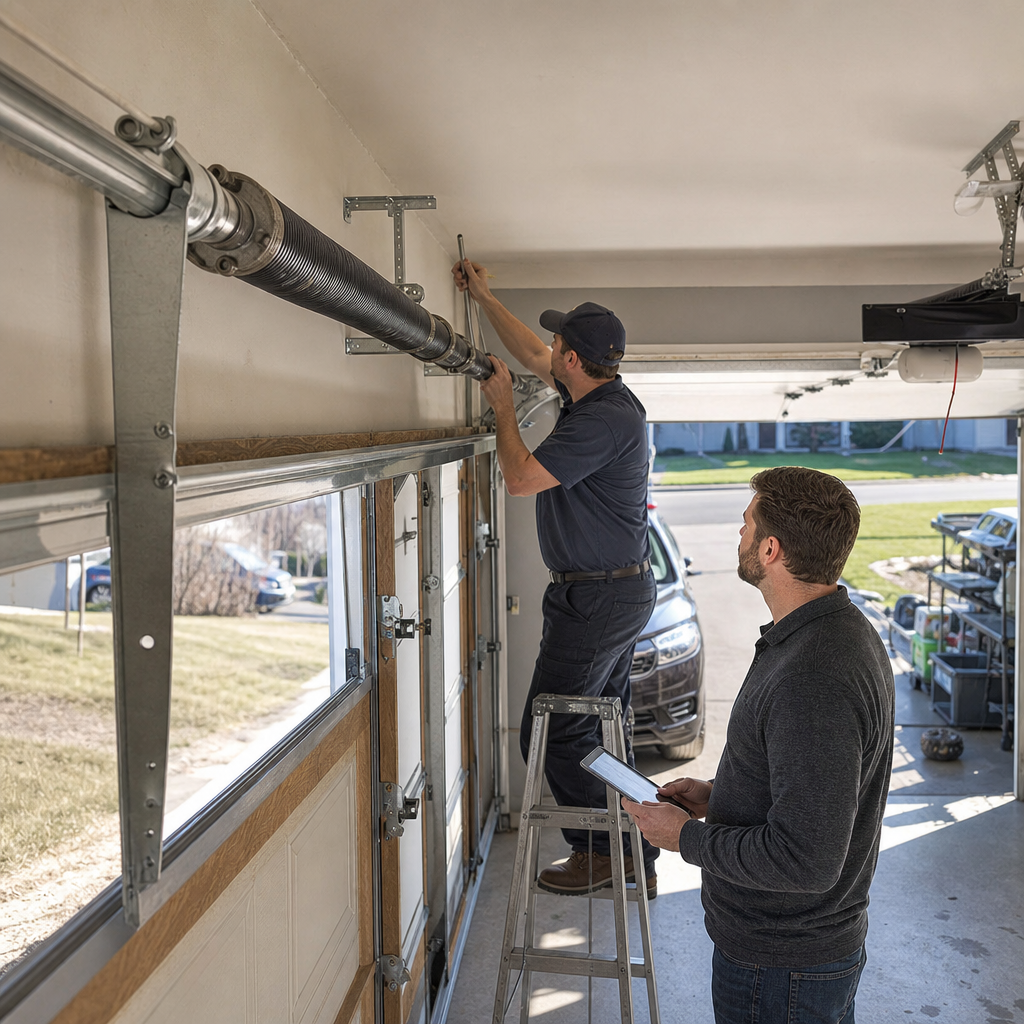
Garage Door Spring Replacement Cost in West Virginia: What You’ll Actually Pay
Garage door spring replacement in West Virginia typically runs $160–$305 for standard torsion or extension springs, with most homeowners landing near the middle of that range. Douglas Ross, Owner and Lead Technician at Halcyon Garage Door Installation West Virginia, won’t quote a firm price until he’s physically inspected your door — and there’s a reason for that. Our Garage Door Repair services always start with a proper inspection. Call (855) 934-0471 for a free, no-obligation inspection and honest flat-rate quote.
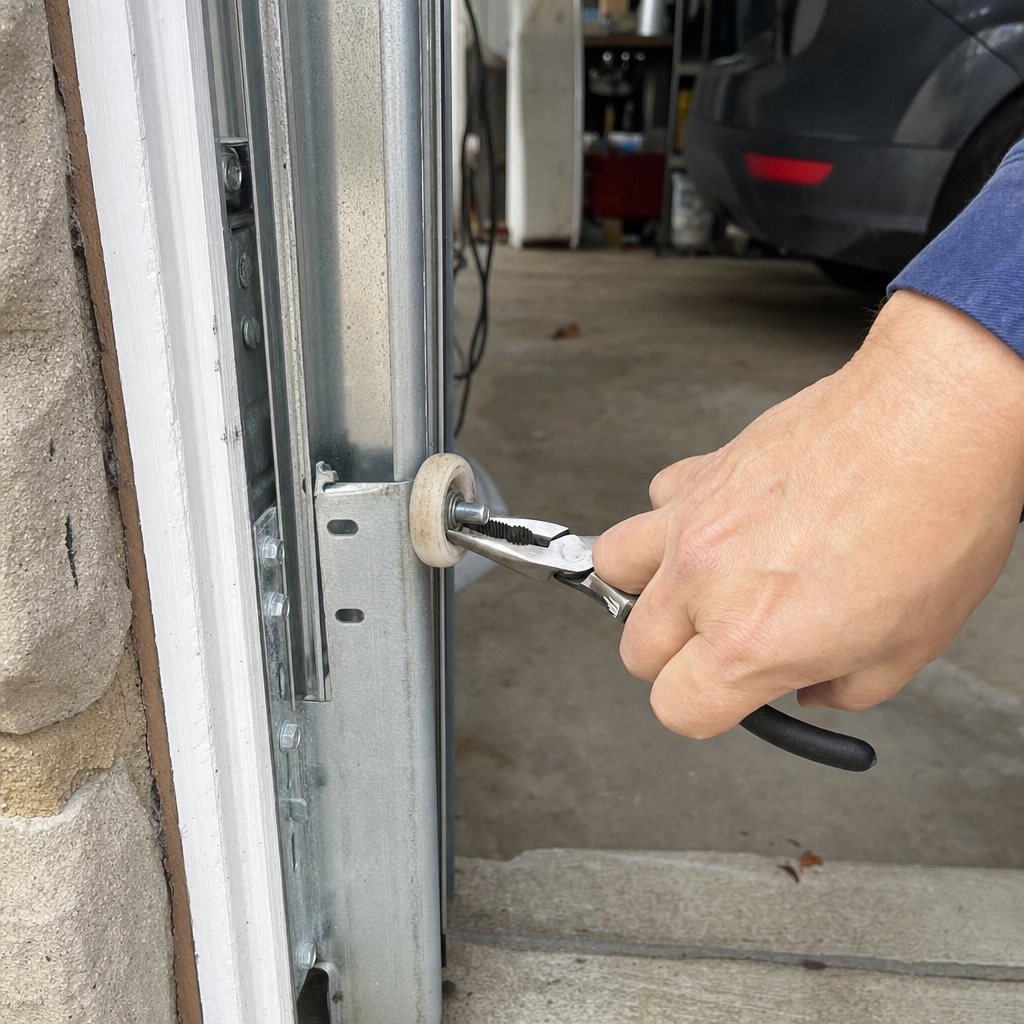
West Virginia’s housing stock tells a story that national pricing guides miss entirely. From the solid-panel wooden doors common in Charleston’s Kanawha City and South Hills neighborhoods to the heavier steel-clad units installed across Huntington’s older subdivisions, door weight varies dramatically. A spring rated for a 150-pound hollow-core door will fail catastrophically — and quickly — on a 250-pound solid-panel door built before 1990. If you’ve ever wondered why does my garage door reverse, mismatched springs are a common culprit. That’s why phone quotes are a gamble we don’t play.
Why Most “Standard” Spring Quotes Fall Short in WV
We’ve lost count of how many callbacks we’ve made to fix another company’s spring job. The pattern is predictable: a technician quotes over the phone, shows up with a spring from the truck that “usually works,” and installs it without weighing the door or counting the cycles. In West Virginia’s climate, that shortcut costs you double.
Here’s what actually determines spring cost and longevity — and why it matters here:
- Door weight: Pre-1990 solid wood or wood-clad doors in neighborhoods like Charleston’s East End or Morgantown’s Sunnyside can weigh 200+ pounds, requiring thicker wire and higher cycle ratings
- Spring geometry: Wire diameter, inside diameter, and wind direction must match your specific drum and track system — not just “single vs. double” as most pages oversimplify
- Cycle rating: Standard 10,000-cycle springs last 5–7 years with normal use; 25,000–30,000-cycle springs cost more upfront but survive WV’s freeze-thaw swings that accelerate metal fatigue
- Brand-specific hardware: A Clopay door and a Wayne Dalton door of identical dimensions often need entirely different spring specs — we stock and service both, along with LiftMaster, Chamberlain, Craftsman, and Raynor systems
The hidden cost of a mismatched spring? Premature failure within one to two seasons, especially with West Virginia’s temperature swings from single digits to humid 90s. We’ve replaced springs in Beckley that failed in 14 months because the previous installer used a .225 wire on a door that needed .250 — a $40 part difference that cost the homeowner a full second service call.
Torsion vs. Extension Springs: Which Does Your WV Door Need?
Most garage doors use either torsion springs (mounted above the door opening) or extension springs (running parallel to the horizontal tracks). For West Virginia’s heavier residential doors, torsion is almost always the right call — and it’s not just about preference.
| Spring Type | Typical Cost Range (WV) | Best For | Lifespan in WV Climate |
|---|---|---|---|
| Torsion Spring Replacement | $180–$305 | Doors 150+ lbs; most pre-1990 solid-panel doors | 7–12 years (with proper cycle rating) |
| Extension Spring Replacement | $160–$240 | Lighter doors under 150 lbs; limited headroom setups | 4–7 years (faster fatigue in freeze-thaw) |
| Torsion Conversion (from extension) | $275–$425 | Heavier doors currently on failing extension systems | 10–15 years |
| Dual Spring System (double-wide or heavy custom) | $240–$540 | Carriage-house doors, solid wood, or commercial-grade residential | 8–12 years |
Extension springs carry their load through stretching and are more vulnerable to the rust and corrosion that West Virginia’s humidity encourages. Torsion springs distribute torque through a steel shaft — more controlled, more durable, and safer when they eventually wear out. We’ve converted dozens of extension systems to torsion in Huntington’s older homes alone, usually after a homeowner heard the distinctive “gunshot” of a snapped extension spring at 6 AM. If you’re dealing with a Garage Door Wont Close in West Virginia, WV, a broken extension spring is often the culprit.
Safety note: Garage door springs are under extreme tension — a standard torsion spring stores enough energy to cause serious injury or worse if handled improperly. We never recommend DIY spring replacement. The winding bars, cable tension, and bracket torque require specific training and tools. When Douglas Ross handles your spring job personally, he’s working with equipment he’s calibrated thousands of times over eleven years.
What Drives the Real Cost? Beyond “Single vs. Double”
Competitor pages love to simplify spring pricing into “single spring” or “double spring.” That’s like pricing a tire replacement by “round and black.” Here’s what actually goes into your quote:
Wire diameter and coil count: A .207 wire spring costs less than a .250, but on a heavy Charleston door, it’s false economy. We measure door weight with a calibrated scale, then match wire diameter, inside diameter, and overall length to the manufacturer’s spec — or engineer a custom solution when the original OEM spring is obsolete.
Cycle rating: The number of open-close cycles a spring is engineered to handle. A 10,000-cycle spring on a door used four times daily lasts roughly seven years. A 30,000-cycle spring on the same door lasts 20+ years. For West Virginia homeowners planning to stay put — common in our tight-knit communities — the higher-cycle spring often pays for itself twice over.
Hardware condition: Worn cables, frayed drums, or bent end bearings turn a simple spring job into a broader repair. We inspect these components during every inspection because installing a new spring on failing hardware is like putting new tires on a bent axle. Our garage door repair service in West Virginia addresses these interconnected systems together.
Brand-specific engineering: Wayne Dalton’s TorqueMaster system uses an enclosed tube design completely different from Clopay’s standard torsion setup. Chamberlain and LiftMaster openers have specific spring balance requirements for their force settings to work correctly. Douglas’s factory familiarity with all eight major brands means we don’t guess — we match the spec.
Why We Don’t Quote Over the Phone — And Why That Saves You Money
We get it: you want a number before you commit to a visit. But we’ve seen too many West Virginia homeowners burned by lowball phone quotes that balloon on arrival.
Here’s the reality: two 16×7 doors in the same Morgantown neighborhood can differ by 80 pounds in weight. One has a lightweight steel sandwich construction; the other is solid cedar with iron hardware. Quote the light door’s spring for the heavy door, and you’re looking at callback territory — or worse, a spring that snaps under load and damages the door, the opener, or something more valuable.
Douglas Ross’s flat-rate-after-inspection model works like this:
- You call (855) 934-0471 — we schedule a same-day or next-day inspection, often with Douglas himself
- He weighs the door, measures the existing spring geometry, inspects cables, drums, bearings, and opener force settings
- You get a flat-rate quote with no hourly surprises, no “while we’re here” add-ons, and no pressure
- The price covers the spring, installation, balance tuning, and safety check — if we find worn cables or a failing bearing during inspection, we’ll show you and quote separately, but the spring price doesn’t shift
This approach protects you from the classic bait-and-switch: a $129 phone quote that becomes $340 on-site because “your door’s heavier than standard.” In eleven years and nearly 600 reviews, we’ve built our reputation on the opposite — straightforward diagnosis, honest price, door done right.
West Virginia’s Climate: The Hidden Factor in Spring Longevity
Our state’s weather pattern is brutal on garage door hardware. Summers in the Kanawha Valley bring 80%+ humidity that promotes surface rust on springs and cables. Winters in the Alleghenies drop temperatures below zero, contracting metal and stressing already-fatigued coils. The freeze-thaw cycle — sometimes within a single week in transitional seasons — accelerates micro-cracking in spring steel.
We’ve noticed a clear pattern: springs installed without rust-preventive coating, or with inadequate cycle ratings for actual door weight, fail 30–40% faster in West Virginia than in drier, more temperate climates. That’s why we spec galvanized or powder-coated springs for outdoor-exposed installations, and why we always verify that the cycle rating matches real-world use — not just the manufacturer’s minimum.
In river-adjacent neighborhoods like Charleston’s Kanawha City, where Douglas Ross grew up helping his grandfather maintain that old detached garage, humidity is even more punishing. The practical upbringing stuck: we don’t install hardware we wouldn’t want on our own family’s door.
When Spring Replacement Turns Into a Bigger Decision
Sometimes a spring failure reveals that the door itself is near end of life. If your door is sagging, delaminating, or has multiple failed panels, spring replacement becomes a Band-Aid. We’ll tell you straight — and we’ll show you why.
Key indicators that spring replacement alone isn’t the right call:
- Door weight has increased significantly due to water absorption in wood cores or failed insulation — common in 30+ year doors across West Virginia’s older housing stock
- Multiple previous spring failures on the same door, suggesting chronic under-spec or structural misalignment
- Opener straining or reversing prematurely, indicating the door has become too heavy for the existing system
- Cost of spring + cable + roller + track repairs approaches 60%+ of new door installation ($630–$1,980 for standard residential)
We’d rather earn your trust with an honest “replace the door” recommendation than collect a spring fee and see you again in six months. That’s how eleven years and 597 reviews averaging 4.9 stars happened — one door at a time, with no callbacks we could have prevented.
FAQs
Garage door spring replacement in West Virginia typically costs $160–$305, with most homeowners paying between $180 and $250 for a standard torsion spring on a residential door. The exact price depends on door weight, spring cycle rating, and whether additional hardware like cables or bearings need attention. Call (855) 934-0471 for a free inspection and flat-rate quote — estimates are always free.
Spring replacement is almost always the right choice over “repair” — a broken spring is a fully failed component, not a fixable one. The real question is whether to upgrade to a higher-cycle spring or convert from extension to torsion, which costs more upfront but lasts years longer. For West Virginia’s climate and heavier doors, we typically recommend the upgrade — it’s cheaper over the life of the door.
Yes — emergency garage door service is part of our core offering, and we stock springs for all major brands including Clopay, Wayne Dalton, Amarr, and Raynor. When your spring snaps and traps your car or leaves your home unsecured, Douglas Ross prioritizes getting you operational quickly. Call (855) 934-0471 and we’ll schedule you as soon as possible, often same-day.
West Virginia’s humidity, freeze-thaw temperature swings, and older, heavier residential doors all accelerate spring fatigue. Springs installed without proper cycle ratings for actual door weight, or without rust-resistant coating, fail 30–40% faster here than in drier climates. We spec hardware specifically for these conditions — it’s why our callbacks are rare.
Ready for an Honest Quote? Call Halcyon Today
A broken spring doesn’t fix itself, and every day of delay risks further damage to your opener, cables, or door panels. When you want the Best Garage Door Repair in West Virginia, WV, call us first. When you call (855) 934-0471, you’re speaking directly to the team Douglas Ross built — owner-operated, review-proven, and focused exclusively on garage doors. No franchise dispatchers, no rotating subcontractors, no surprises.
We’ll inspect your door, weigh it properly, and give you a flat-rate price you can count on. A quiet garage door is a safe garage door — let’s keep it that way.
Written by Douglas Ross, Owner & Lead Technician at Halcyon Garage Door Installation West Virginia, serving West Virginia, WV.